Studio visit · Cumbria · 9 August 2026
Ellis Crowe.
The photograph is the work. The token is the negative.
Interview by Rohan Vekaria
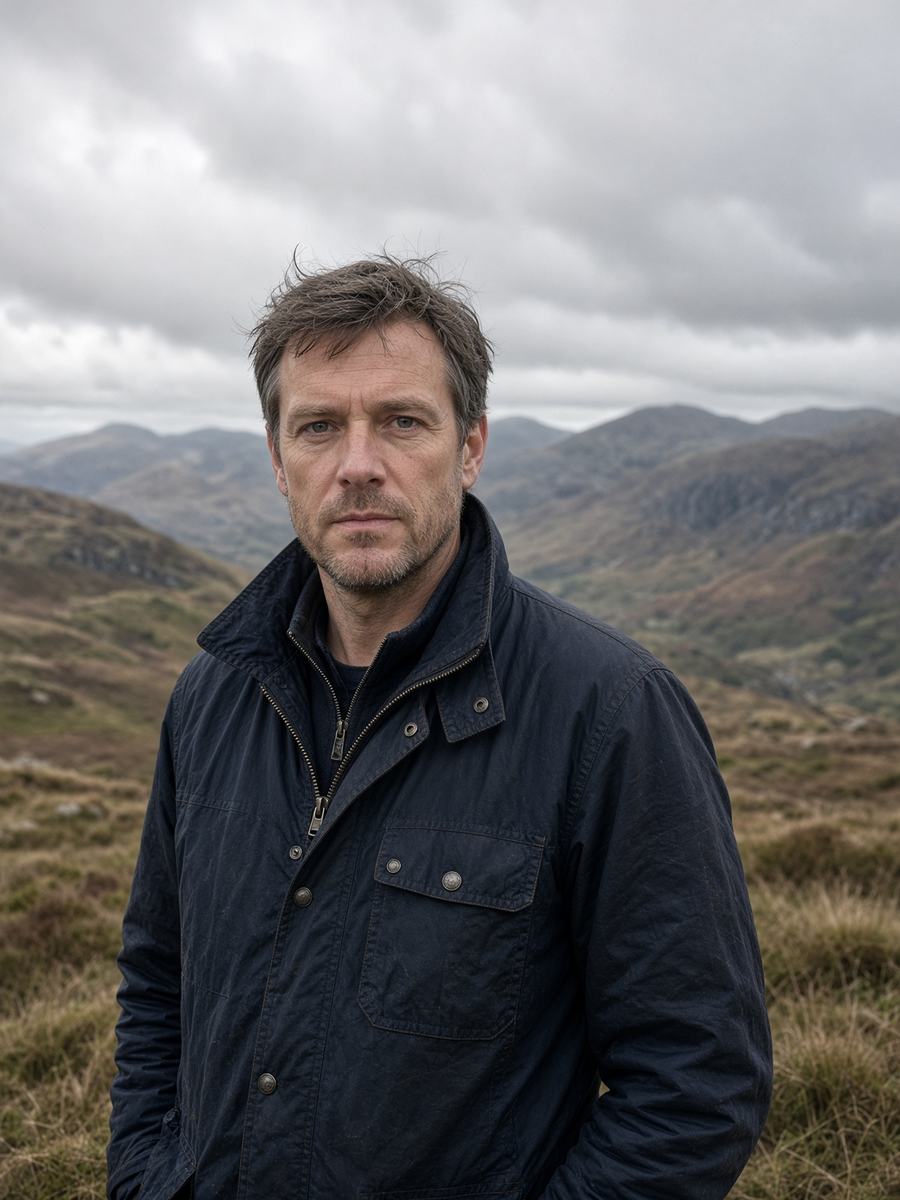
Ellis Crowe walks like someone who has already decided the weather will not be an excuse. We met him on a ridge above the Kent, waxed jacket, no performance of wilderness. He photographs the same stretches of wall, water and sky until the pictures stop being views. Then he does something that still makes dealers uneasy: he puts a live photographic object on-chain in such a way that the contract, not a jpeg, is the thing that can be editioned.
“A screenshot is a postcard,” he says. “I am not in the postcard trade.” His files are large, his editions small, his documentation almost bureaucratic. Each token points to a frozen development of a picture — not a filter, a development — and the collector receives a print only if they ask, and only after the token has moved. The print is numbered. The chain is the ledger of that numbering. He has no interest in making the print scarce by theatre. He is interested in making the relationship between negative and print legible again, in a medium that forgot negatives.
If you cannot hang it, you should at least be able to say what you own.
Crowe splits time between a darkroom in Newcastle and a shed that looks, from the lane, like every other shed. He is unsentimental about the north and unimpressed by people who discover it as a brand. “I live here because I live here. The work would be worse in a co-working space. That is not a manifesto. It is acoustics.”
He will show in London when a room can go dark. He will not show on a monitor in a corridor. The distinction has cost him sales. He seems, on the hillside, not to mind.