Essay · 4 September 2026 · 12 min
The ledger is not the work.
A token can prove a sequence of events. It cannot, by itself, make those events worth looking at.
By the democratpeak desk · Milnthorpe
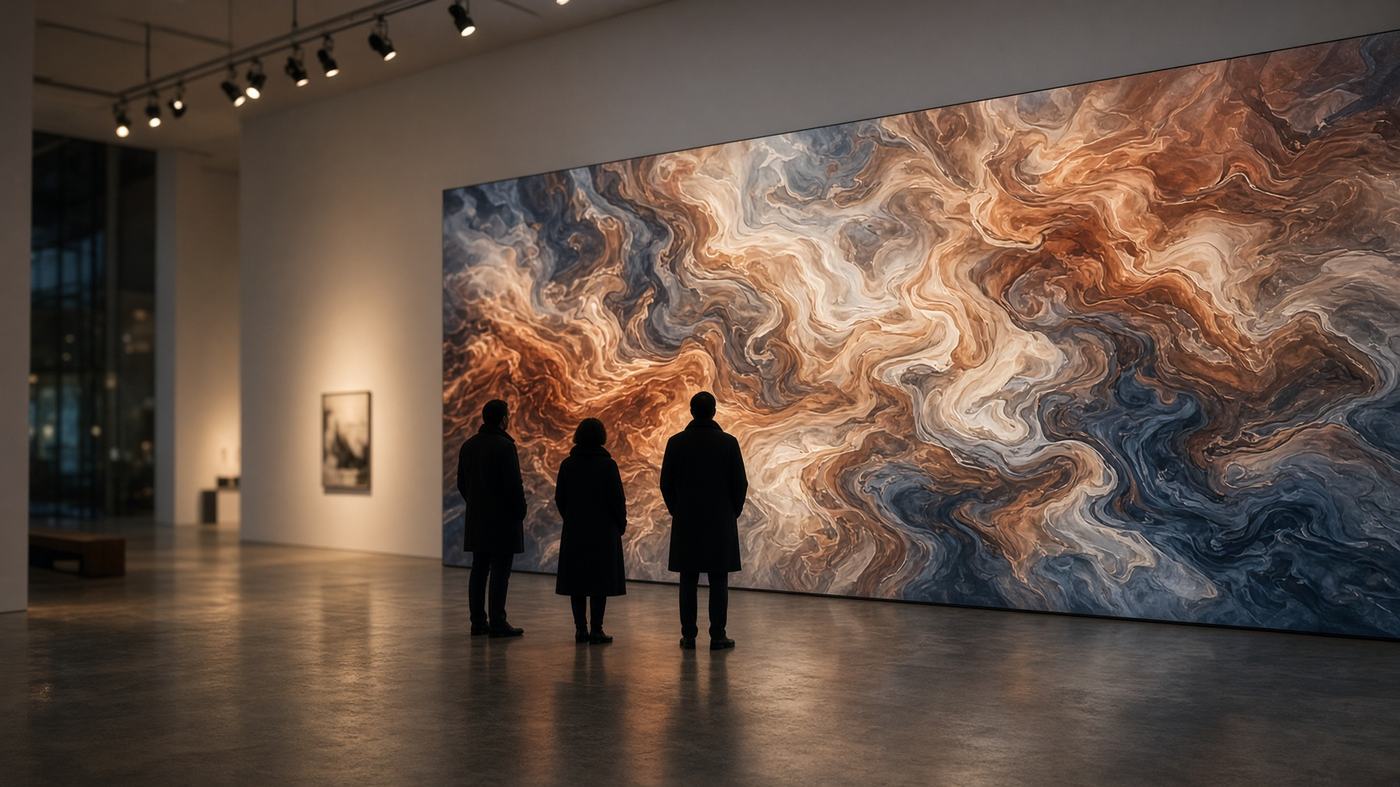
In 2021 it was possible, if you stood in the wrong room, to believe that the chain was the medium. People spoke of “on-chain art” the way earlier decades spoke of “video art”: as if the substrate were the genre. A lot of what followed was filing. Jpegs with receipts. Receipts with discord roles. Discord roles with a promise that the screenshot was an object.
We write from Milnthorpe, which is a useful inconvenience. The plus-code on our masthead is not a bit. It is a desk, a wet street, and a view that does not care about gas. Distance makes the vocabulary easier to hear. When someone says a work is “fully on-chain”, the honest question is still: what is the work?
There is a serious answer. Output that cannot be separated from its contract — long-form generative systems whose parameters live where they can be inspected, pieces that unfold as calls rather than as files — is doing something that a print, a film, or a PNG cannot. The craft is in the constraint. It is closer to score than to poster. That lineage runs through plotters, through early net art, through the British artists who have spent years training models on datasets they gathered themselves rather than scraping the open web. Anna Ridler’s public practice is the example usually reached for, and for good reason: the labour is visible, the dataset is the drawing, the model is not a magic trick.
A hash is a very expensive way of saying: this, not that, in this order.
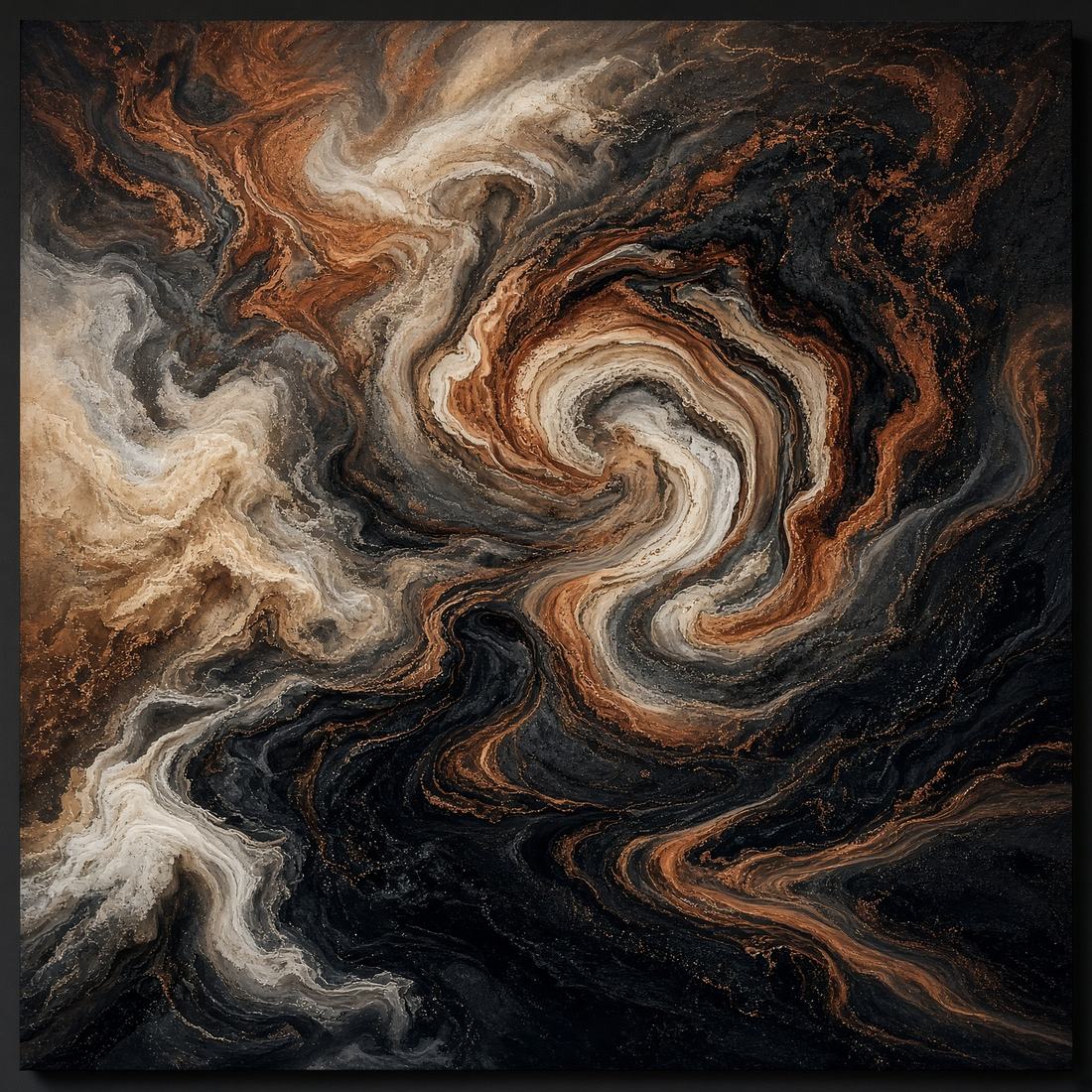
The UK already had rooms for this before anyone minted a profile picture. Serpentine’s Arts Technologies programme has spent years putting artists next to engineers without asking them to become a start-up. arebyte, in London, has treated software and networks as sculpture with more patience than the market did. Furtherfield, in Finsbury Park, never needed a boom to argue that art and infrastructure belong in the same sentence. None of these places are “NFT galleries”. That is precisely why they matter to anyone trying to look at on-chain work without the hangover.
What the token is for
A token is excellent at three unglamorous jobs. It can timestamp a state. It can transfer a claim. It can make an edition that does not rely on a dealer’s spreadsheet. Those jobs are not trivial. Ask anyone who has tried to keep a video installation in a collection for twenty years. Ask a print studio how editions actually leak. The chain is a public notary with opinions about money. Used that way, it is a tool. Used as a personality, it is a costume.
Craft, meanwhile, is still the old problem: attention, revision, a refusal to ship the first interesting accident. In the studios we visit, the mint is late in the process. Weeks of drawing. A print pulled to see whether the colour holds. A contract read aloud because nobody should sign what they cannot say. Then, and only then, a hash.
If you collect, look at the work in a room. If you make, put the work in a room. The ledger will still be there in the morning. The room might not, which is why it is the more honest test.